



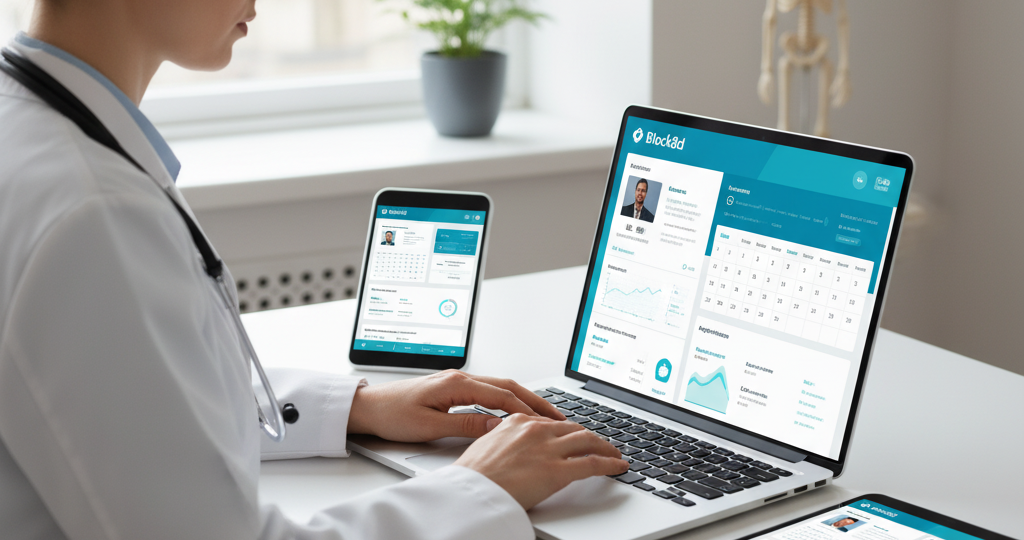
The healthcare industry is undergoing massive digital transformation, driven by the rise of Electronic Health Records (EHR) and Artificial Intelligence (AI). What used to be simple digital patient files are now intelligent systems that support diagnosis, streamline workflows, and enhance patient outcomes. In 2025, healthcare providers that fail to adopt AI-driven EHR solutions risk falling behind.
At Block8D, we help clinics, hospitals, and homecare providers transition to future-ready digital systems—making their operations more efficient, secure, and patient-centered.
1. Automated Clinical Documentation
One of the biggest challenges in healthcare is documentation. Physicians spend hours manually typing notes, updating charts, and managing records. AI-powered EHR changes this by using:
- Voice-to-text medical dictation
- Automated chart population
- Smart form completion
- Error detection and flagging
This reduces administrative time by up to 40%, allowing clinicians to focus more on patient care.
2. Predictive Analytics for Better Clinical Decisions
AI can analyze large health datasets to identify patterns and risks earlier than humans can.
Predictive features include:
- Early detection of chronic disease
- Risk scoring for hospital readmission
- Medication interaction alerts
- AI-generated care recommendations
These insights help providers deliver accurate, personalized care.
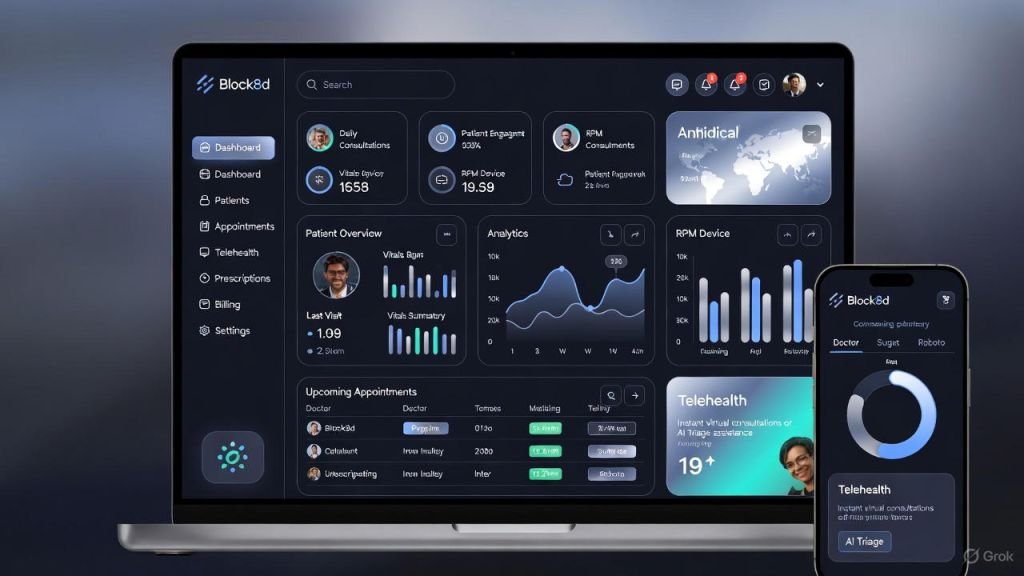
3. Enhanced Patient Engagement Through Smart Portals
Today’s patients expect convenience. AI-enhanced patient portals allow users to:
- View medical history
- Receive automated health reminders
- Chat with AI healthcare assistants
- Access telehealth services
- Manage prescriptions and appointments
These features improve satisfaction and reduce no-shows.
4. Integration With Remote Patient Monitoring (RPM)
Wearable devices now track:
- Blood pressure
- Glucose levels
- Oxygen saturation
- Heart rate
- Sleep quality
When combined with an AI-driven EHR, clinicians receive real-time alerts and can intervene before complications occur.
5. Improved Billing Accuracy & Revenue Cycle Management
AI reduces coding errors and improves claims processing by:
- Auto-matching diagnoses with billing codes
- Identifying potential denials
- Speeding up reimbursement cycles
This ensures clinics maintain healthy, predictable revenue.
Conclusion
AI-enabled EHR systems are no longer optional—they are the future of healthcare. Providers who adopt these technologies gain a competitive advantage through efficiency, accuracy, and better patient outcomes.
Want an AI-powered EHR built for your clinic, hospital, or homecare business? Block8D can design, develop, and deploy a custom solution tailored to your workflow.
